Bicycle Thieves (1948)
- Will
- Mar 5
- 3 min read
Updated: Mar 16
This is a slightly more structured stream of consciousness review than my traditional film review style. I watched Bicycle Thieves during the summer between my freshman and sophomore years of college. My overall rating for the film was 1.5 stars out of a possible 4. On my scale, 1.5 stars qualifies as "tolerable."
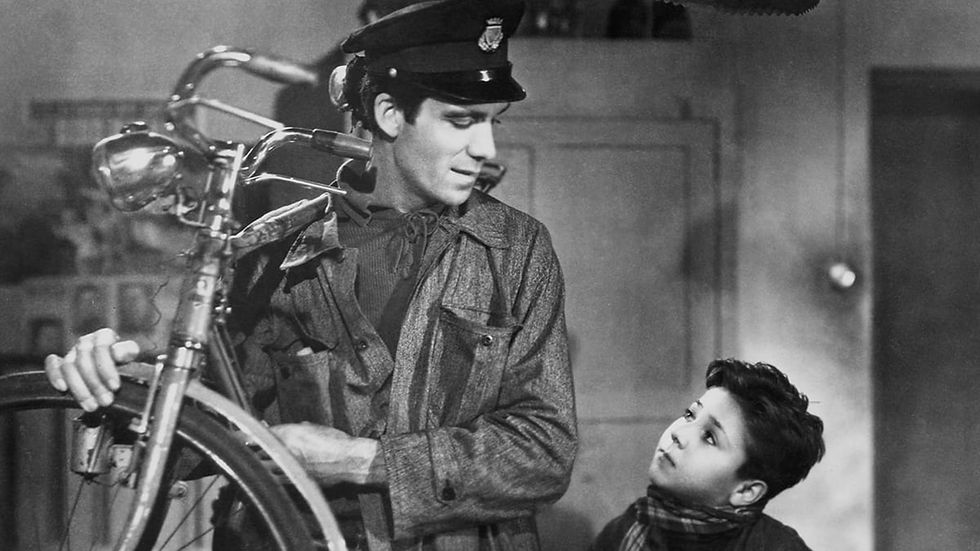
Very rarely have I hated a film as much as this one. The heartbreak of this film is undeniable. The message that (almost) nobody in the world cares about your own problems is very clear and present throughout the film. The use of pluralization in the title to signify that everyone who does not help Ricci (Lamberto Maggiorani) is in part a thief… is genius. But these are not reasons to applaud the film, and seem to be the very reasons why this film is so praised. The acting, apart from Ricci and, the real talent of the film, his son Bruno (Enzo Staiola), is poor borderline abysmal. The score is sweeping and lovely at first, and finishes as a sappy collection of music that anyone listening to it for 90 minutes would wish they had gone deaf before this moment in their life. Perhaps the real problem with this movie is the ending. Is it a powerful ending? Yes. Is it an ending that best represents the message? Yes. Is it an ending that perfectly shows why this is a neorealist picture? Yes. But here’s where none of these yeses makes a damn bit of difference: this ending can be seen from miles away. Dare I say it, I saw this ending the moment after the titular bike was stolen. This is so simple a story that the ending is given to you before the film even gets off its feet. De Sica gives you the ending and then makes you sit through almost an hour just for you to see the very ending that you predicted that hour ago. There is no alteration here, no possible change. What irks me the most is that this is the ending that the film deserves and, because of this, the film is ruined. Unlike The 400 Blows (1959), where the rapid change and abrupt, unexpected ending sours the film, the failure here to change the dragged out, expected ending kills the film. Both suffer from poor choices for endings. The difference: the French film mentioned has enough going for it elsewhere that it is still a grand, very good film to watch and provided enough surprises and enjoyment to court the possibility of watching it again. The Italian film that this critique is about has nothing going for it elsewhere and is a poor, dragging picture that’s repulsively simple plot and predictable outcome produces a bitter feeling that this is one film that the [cinematic] world has gotten wrong and, although I so very desperately want to watch it again and see if there is something I missed to restore my faith in the consensus of greatness surrounding this film, I know that there is not going to be that special something to change my opinion and restore my faith. I know that watching this again will only make me hate the film even more than I already do and find the sentimentality that this film produces to be just as barren and dragging as the rest of the movie.
In a four word conclusion: The critics are mistaken.


Comments